
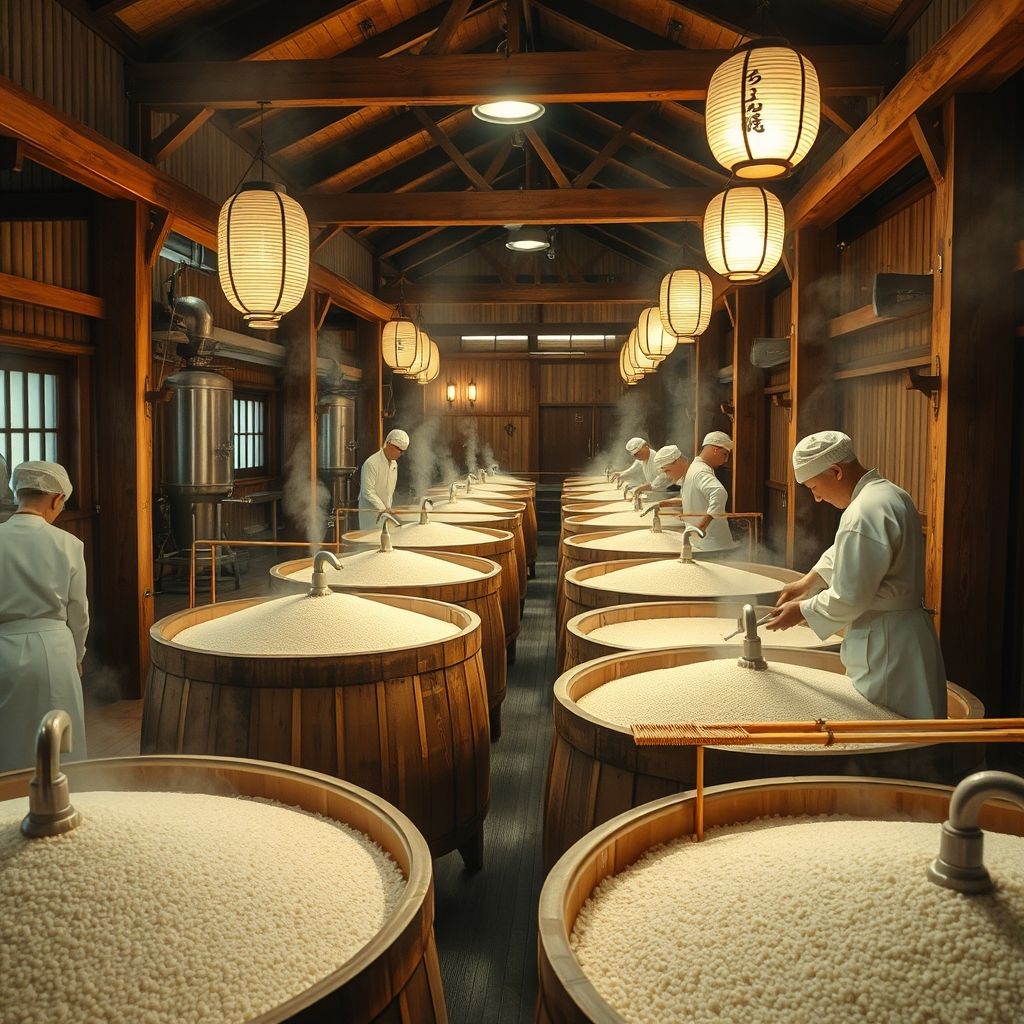
‘Sake Brewery Tourism1’ is gaining attention as a new travel style that not only allows participants to visit sake breweries and taste sake and other alcohol but also offers an immersive experience in the region’s culture, food, and nature. We spoke with Professor Emeritus HOSONO Sukehiro of Chuo University, who is dedicated to promoting its growth.
“There are about 1,350 sake breweries in Japan, producing sake, shochu, awamori, wine, beer, and other alcoholic beverages. For those who want to learn more about alcohol and taste it, I recommend visiting the local breweries where it’s made, experiencing the natural environment and climate of the area, tasting the sake, and hearing directly from the people who make it,” says HOSONO.
As participants tour sake breweries, they also experience the charm of the region through ‘Sake Brewery Tourism.’ Local tourism businesses, municipalities, and sake breweries are collaborating on various initiatives to introduce people to regional sake. Some breweries host events such as brewery tours, tasting sessions, and kura openings2, while others offer experiences where visitors can participate in aspects of the sake-making process.
Among the various sake brewery tours that HOSONO participated in during 2024, a noteworthy example is a journey through the northern Kyushu region in the southwest of Honshu, where he traveled by train, visiting sake breweries in various sake-producing areas.
“The trip aboard JR Kyushu’s sightseeing train, the limited express ‘Futatsuboshi3’ (Two Stars), was especially memorable. The train, departing from Hakata Station in Fukuoka City, Fukuoka Prefecture took us to Hizenhama Station in Kashima City4, Saga Prefecture. As the train arrived, the station platform quickly transformed into a tasting area with souvenir shops. Passengers got off the train all at once and enjoyed local sake and delicacies,” comments HOSONO.
“I was at the station as a host for the tour, and what stood out the most was seeing passengers walk into the small sake bar inside the station building. It was such a pleasure to taste and compare local sake with them. Afterward, I visited a local shrine with tour participants, purchased regional specialties at the station, and strolled through Sake Brewery Street, enjoying the experience. While traditional tours that visit sake breweries for tastings are great, special tours like this one, where local breweries collaborate with public transportation to offer engaging sake-related activities at train stations, are increasing. In Tokyo, for example, an annual event allows participants to visit five sake breweries within the city using trains and other public transport. Those who visit at least three breweries can enter a lottery for special prizes.”
Although HOSONO had originally been fond of wine, his interest in Japanese alcohol grew when he became Chairman of the Sake Brewery Tourism Promotion Council. He came to believe that Japanese sake holds great potential to drive regional economic revitalization as a high-value-added component of tourism.
“Wine has a strategic concept called ‘terroir5,’ where the natural environment of the vineyard significantly influences the character and quality of the wine each year, adding value. Similarly, in Japan, in addition to rice, regions blessed with natural environments where delicious water springs forth always produce excellent sake. I hope local residents will pay more attention to the unique character of their regions, increasing the value of both the sake and the regional products and landscapes that give birth to it,” says HOSONO.
“With the increase in visitors to sake breweries, it will also contribute to the revitalization of local communities. Many people, both domestic and international, visit the sake breweries across Japan that produce excellent sake, enjoying the pairing of local dishes and sake, as well as the natural landscapes. Some breweries offer special programs, such as overnight stay with sake-making experiences, rice planting and harvesting as part of the raw material process, and learning about fermentation culture. I believe that journeys that deeply immerse people in the charm of regions through sake will become an increasingly popular style of tourism in the future.”
The sake brewery map provided by the National Tax Agency of Japan (available on their website) contains detailed information, such as whether visits are permitted and if English-language support is available. The map is offered in Japanese, English, Simplified Chinese, Traditional Chinese, and Korean. When planning your trip, you can use this resource to explore your favorite sake breweries while enjoying Japan’s beautiful landscapes.
 Previous Article
 Next Article
- Categories:
- Share :
Previous ArticleNext Article